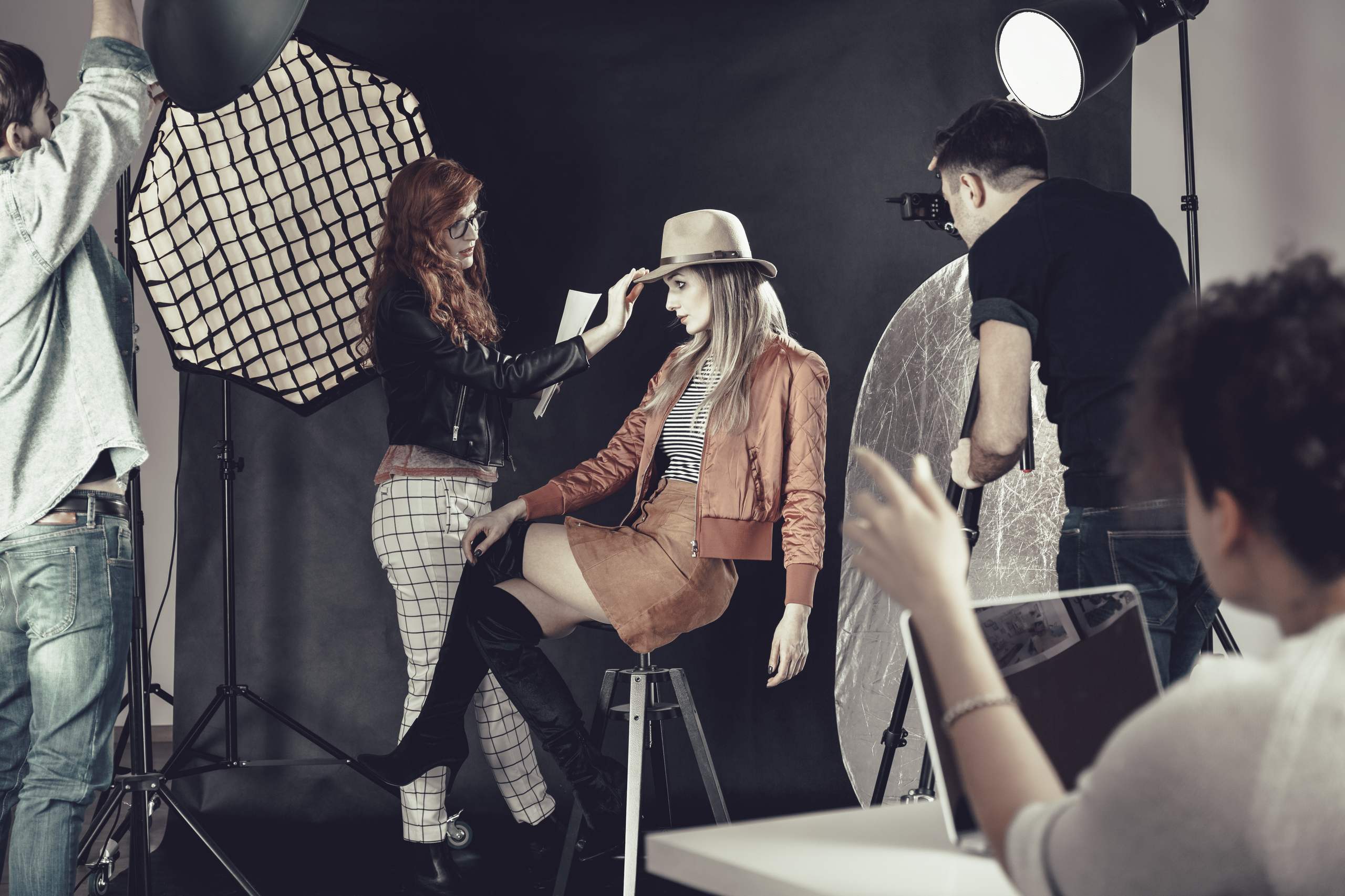
When we look at the results, it seems simple. But behind each finished photo area stands a clearly organized, logical system of actions in which the transition from idea to concept, and from concept to design, is very obvious. Beginners often underestimate this and focus only on the final look. But, in the event business, workflow plays a key role. It will be a lot easier to implement an idea in reality if there is a workflow.
Everything starts not with decoration, but with constraints
In the beginning, event spaces have limitations: dimensions, power availability, safety requirements, installation time.
A good designer always begins by thinking about the space and the limitations that will be involved. Only then comes the development of the idea itself.
From idea to concept: what’s included
In the concept, the idea is formulated in the direction to follow and the main accents in the area. This is a more defined idea of the future result: mood, style, and the main object of the scene.
It is important here not to get lost in too detailed, but to focus on what is essential. For a good concept, there needs to be only one idea to be realized. All the rest is an illustration of this idea.
Composition construction in layers
The photo zone is built from layers: base, foreground objects, background decorations.
When this composition is thought out at the very beginning, there is no flat effect and the lack of balance. This approach helps make the photo zone visually complete and balanced even in reality.
From idea to real materials
At this stage, the idea is transformed into materials: what is needed, whether it will fit, and if not, what can be changed to keep the idea, but adapt to reality.
It is necessary to choose materials not only according to appearance, but also according to technical possibilities. It is not for nothing that the designer, after the initial concept, adjusts the idea for a better fit and makes it possible for installation.
Thinking ahead to implementation
A different thing: to work at a computer, and another to realize it on site. There may be difficulties: uneven floors, the inability to reach the desired light, etc.
This is why the designer has to design taking into account what the future installation will be, how it will be realized. This is necessary not only to make an idea work, but to make it work for us.
The final result, not decoration.
Everything is a single whole. It will be much easier to implement if all stages are thought out and aligned. It is important to pay attention to details and not lose sight of the fact that the final goal is to create a single environment for everyone in the space.
The result
Photo zones design is the workflow. Therefore, the more structured the workflow is, the more reliable and successful the result will be.
If you understand how to move from step to step: from the idea and constraints to the concept, from the concept to composition, from composition to real materials, and from the materials to how we will assemble the design in space. In this case, in practice, the result will always be better, more accurate, and more professional.